
Submit Tool β†’ ⭐Write Review β†’
TECH TURF EDITORIAL & AI INSIGHTS

Electronic Data Interchange (EDI) Articles & Guides

In-depth software benchmarks, AI workflow tutorials, enterprise asset tracking insights, and expert reviews curated by the Tech Turf research team.

LATEST PUBLICATIONS

Recent Articles & Deep Dives

Sponsored
Advertisement

Category: Electronic Data Interchange (EDI)

Get here information about the latest news about electronic data interchange (EDI).

  • Electronic Data Interchange (EDI Software) in Accounting

    Electronic Data Interchange (EDI Software) in Accounting

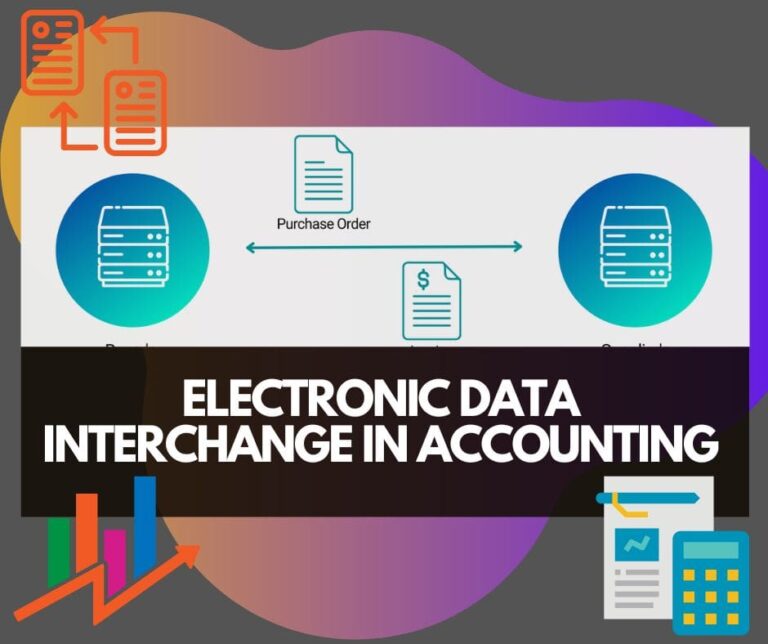
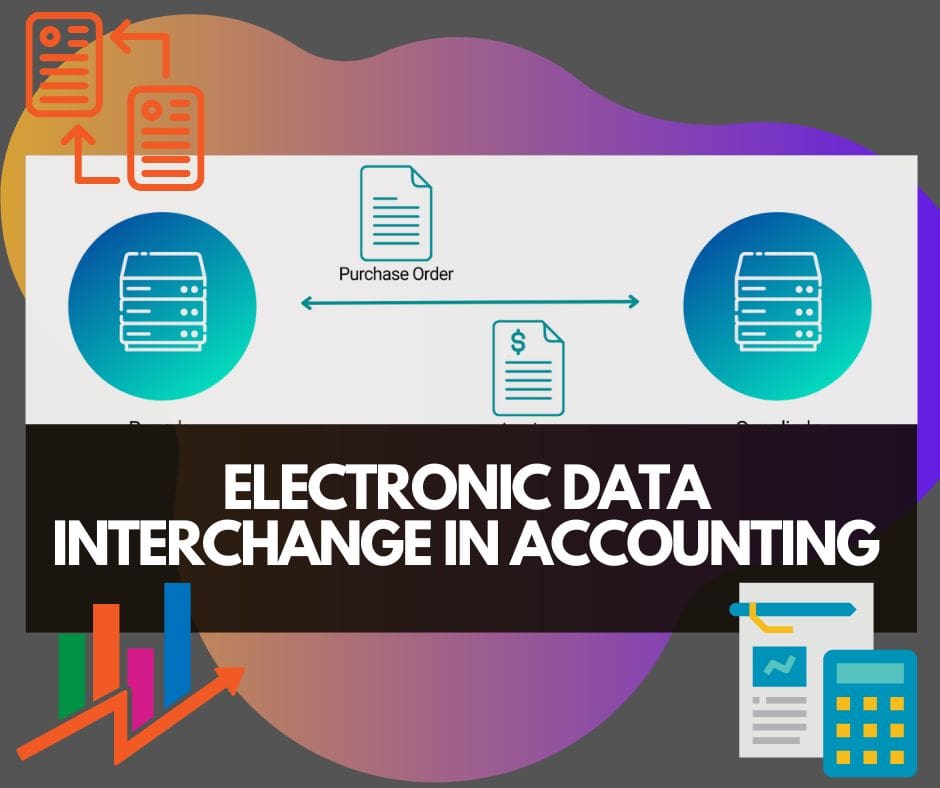
    Electronic Data Interchange in Accounting: EDI has revolutionized the accounting sector by automating processes, improving accuracy, and enhancing collaboration between businesses. As technology continues to advance, EDI Technology is likely to play an even more crucial role in the future of accounting and financial management.

    Electronic Data Interchange (EDI) plays a significant role in the accounting sector, facilitating the exchange of financial and business-related information between different entities electronically. EDI has been widely adopted in accounting and financial management due to its efficiency, accuracy, and cost-effectiveness.

    EDI Technology in Accounting Sector

    below are some key aspects of EDI in the accounting sector.

    Automated Transactions

    EDI enables the automation of various financial transactions, such as invoices, purchase orders, sales orders, and payments. This automation reduces manual data entry errors, speeds up the processing time, and enhances overall efficiency in financial operations.

    Streamlined Processes

    With EDI, accounting processes can be streamlined by eliminating the need for paper-based documents and manual handling of data. This leads to faster document exchange and improves the collaboration between trading partners.

    Cost Savings

    Adopting EDI can lead to significant cost savings for businesses. By eliminating the need for paper, printing, and postage, companies can reduce administrative expenses and free up resources for more value-added tasks.

    Increased Accuracy

    EDI eliminates the need for rekeying data, reducing the likelihood of data entry errors. This increased accuracy helps in avoiding discrepancies and improves overall data quality.

    Faster Payments

    EDI expedites the invoicing and payment processes, resulting in faster and more efficient cash flow management. Businesses can receive payments more promptly and reduce the time spent on chasing overdue payments.

    Enhanced Security

    EDI systems use encryption and secure communication protocols to protect sensitive financial information during transmission. This defines that financial data is secured and confidential using EDI Technology.

    Integration with Accounting Software

    Many modern software solutions are EDI-compatible, allowing for seamless integration of EDI data into the accounting system. This integration further streamlines accounting processes and enhances data synchronization.

    Compliance and Standardization

    EDI follows standardized formats and protocols, ensuring uniformity and compliance with industry standards and regulations. This consistency simplifies the exchange of financial information between trading partners.

    Real-time Visibility

    EDI provides real-time visibility into financial transactions, allowing businesses to track the status of invoices, payments, and orders at any given time. This transparency helps in making informed financial decisions.

    Global Reach

    EDI enables businesses to connect with trading partners across the globe, making international transactions more efficient and reducing the barriers to global business operations.

    What are the examples of electronic data in accounting to interchange Using EDI?

    In the accounting sector, there are several examples of electronic data interchange (EDI) that are commonly used to facilitate the exchange of financial information between different entities. Here are some typical examples:

    Electronic Invoicing (e-Invoice)

    EDI allows businesses to send and receive electronic invoices directly between trading partners. This includes details such as invoice number, date, line items, quantities, prices, taxes, and payment terms. E-invoicing streamlines the accounts payable and receivable processes, reducing processing time and costs.

    Purchase Orders (PO)

    Businesses can send purchase orders electronically using EDI. The PO includes information such as the buyer’s details, supplier’s details, item descriptions, quantities, prices, and delivery instructions. EDI-enabled purchase orders improve order accuracy and speed up order processing.

    Remittance Advice

    When a business makes a payment, the remittance advice contains details of the payment, such as the invoice number and amount paid. EDI facilitates the electronic exchange of remittance advice, making it easier for suppliers to reconcile payments.

    Payment Confirmation

    EDI can be used to send payment confirmation to trading partners. This confirmation verifies that a payment has been made and provides relevant payment details for reconciliation.

    Financial Statements

    Companies can use EDI to exchange financial statements, such as income statements, balance sheets, and cash flow statements. This allows for efficient sharing of financial information with stakeholders like investors, regulators, and business partners.

    Bank Statements

    EDI can be utilized to transmit electronic bank statements, which provide details of transactions, balances, and other account-related information. This electronic exchange helps businesses reconcile their accounts more efficiently.

    Goods Receipts

    When goods are received, businesses can use EDI to transmit electronic goods receipts, which detail the items received, quantities, and condition. This information aids in accurate inventory management and accounts payable processes.

    Shipping Notices

    EDI can be employed to send electronic shipping notices, providing information on the contents of a shipment, shipment date, carrier details, and tracking information. This helps streamline logistics and accounts receivable processes.

    Tax Reporting

    EDI facilitates the electronic submission of tax-related information, such as VAT (Value-Added Tax) returns and other tax reports, to tax authorities. This streamlines tax compliance processes.

    Credit and Debit Notes

    EDI enables the exchange of credit and debit notes, which are used to adjust invoice amounts due to returns, discounts, or other adjustments. This ensures accurate accounting and reconciliation.

    These are just a few examples of how EDI is utilized in the accounting sector to interchange electronic data. The adoption of EDI in accounting processes offers numerous benefits, including increased efficiency, accuracy, and cost savings.

    Top 5 EDI Software Companies in Accounting Sector in 2026

    These are the Top 5 EDI Software Companies in Accounting Sector in 2026, this list is made by the research team of Tech Turf. We have tried everything to make it accurate but do not claim it to be 100% accurate.

    If you have like this post EDI Software in accounting the please share it with your friends on social media website.

  • Paper Document transaction Vs. Electronic Data Interchange

    Paper Document transaction Vs. Electronic Data Interchange

    Tech Turf is presenting here the article that will tell you the difference and similarities between theΒ Paper Document transaction and Electronic Data Interchange. You will get here the answers for, how Paper Document transaction and EDI is different and howΒ Paper Document transaction and EDI is similar.

    EDI Meaning

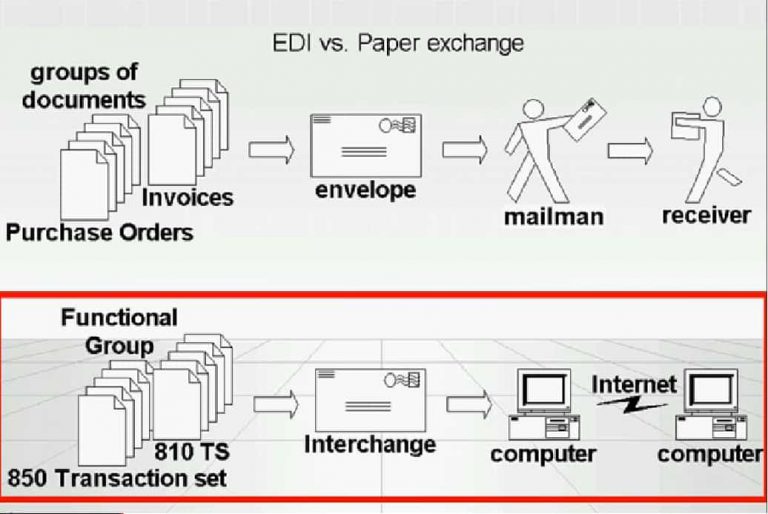
    EDI was designed as much to be as an electronic replica or mirror off a paper document transaction. The paper documents or forms are called transaction sets in EDI and how the documents are arranged and grouped by their departments is equivalent to how the functional group segments separate the transaction sets by their functions.

    Electronic Data Interchange Vs. Paper Exchange
    Electronic Data Interchange Vs. Paper Exchange

    The paper envelope that encloses the documents is equivalent to the interchange segment that encloses the group of transaction sets and the person sending the mail and the one receiving it would be equivalent to a computer sending an EDI file and a computer receiving it. remember that EDI is the exchange of electronic files between computers.

    Complete Electronic Data Interchange

    Comparison of a Paper Envelope to The Interchange Segment (ISA)

    While an envelope has a post-office mailing addresses on it, the interchange segment has the senders and receivers electronic IDs in it.

    Similar to how you would arrange the paper documents by grouping them by their departments that would process them. for example purchase orders are grouped together so that they get sent to the accounts payable Department, while the invoices go to the accounts receivable Department. EDI interchange have the functional group so as to group the transaction sets by their functions. the GS or functional group header segment denotes the start of a group of transaction sets the GE or functional group trailing segment denotes the end of the group. note that the GE segment has the count number of transaction sets that were enclosed in the group. example, 3 purchase orders one invoice. it also has a control number of the GS segment.

    EDI 850 Implementation

    Thanks

  • EDI Standard, Transaction Sets Data Segment| EDI 850 Implementation

    EDI Standard, Transaction Sets Data Segment| EDI 850 Implementation

    In this Article, we will cover the basics of EDI, you will get to its x12 format, its transaction sets, its data segments, elements and loops then finally the implementation guideline.

    Meaning of EDI

    Advantages of Using EDI

    Following are Two main advantages of Electronic data interchange.

    • Easy to manage huge volumes of transactions at minimal operating cost.
    • Eliminate mailing delays and data entry errors.

    EDI Process

    There are two well-defined processes in EDI.

    • Outbound process
    • Inbound process

    EDI Process - inbound and outboud
    EDI Process – inbound and outbound

    The outbound process is, when an EDI file gets generated from data out of an existing system and then sent to a trading partner.

    Inbound process is, when an EDI file is received from a trading partner and its data gets parsed and mapped into an existing system.

    Complete Electronic Data Interchange Knowledge

    EDI Format

    EDI format
    EDI format

    EDI Segment Terminators
    EDI Segment Terminators

    edi element terminators
    EDI element terminators

    edi data segments
    EDI data segments

    edi data elements
    EDI data elements

    let us now take a closer look at the EDI format. in here we have a sample EDI X – a file as you can see, it is quite cryptic but remember it was designed for a computer to process and not for us to read. The EDI format is made up of data segments. separated by segments terminators, the data segments are made up of data elements separated by element terminators.

    Comparison of a Paper Envelope to The Interchange Segment (ISA)

    Order of EDI x12 Standard Segments

    So the order of the EDI x12 segments goes as follows.

    The interchange segments encloses the functional group segments that in turn encloses the transaction set segments.

    Order of the EDI x12 Format
    Order of the EDI x12 Format

    EDI Transaction Sets, Data Segments & Data Elements

    A transaction set is basically the document itself. it is made up of data segments and these data segments are sectioned into areas or tables. the heading is area one or table one, the detail is area two or Table two, the summary is area three or Table three. not all transaction sets have all three areas and in fact many do not have the summary section.

    Transaction sets are made up of data segments and in turn the data segments are made up of data elements. in this example we have four data elements that are separated by element terminators. element terminators can be of any character but the asterisk is commonly used.

    EDI Data Segment, Data Elements and terminators
    EDI Data Segment, Data Elements and terminators

    At the end of a data segment is the segment Terminator. segment terminators can be of any character or string in this example we use the tilde. some data elements are qualifiers, they hold codes that will describe the values of data elements after them. in this example we have BT that tells us that the element is a bill to company.

    The nine tells us that the company ID is using the DUNS identification code. if we were to view a segment as a sentence and the n1 segment would say the bill to company name is ABC Inc with the DUNS ID of one, two, three, four, five, six, seven.

    EDI n1 segment viewed in efilemanager
    EDI n1 segment viewed in efilemanager

    Some view data segments to be like records and their data elements to be like fields. data segments can be viewed better by using the EDI-dev efilemanager. in here we have a section that displays the same in one segment. note how the descriptions of the codes are displayed next to them.

    EDI loops

    Sometimes Data segments have to be read together to obtain the correct information that is when we use EDI loops to denote such relations. EDI loops are used to keep related segments together, so that together they can convey the correct information. loops also make possible to repeat a group of related segments. in our example we have the n1, n2, n3 and n4 segments in a loop. note how the segment’s depend on each other. here the n3 segment with the street address value does not make sense without the n1 segment telling us that it is a street address of the bill to company.

    EDI loops
    EDI loops

    This example also shows how the loop is used twice to hold two different information of similar format. the first loop holds the billed to address while the second loop holds the ship to address.

    The EDI X12 Standard

    Even though it is the standard still has many version and transaction sets, the users have to be aware of so as to exchange EDI files successfully. the version number is indicated by its first three digits, the last digit indicates a release. here, the 40 10 and the 40 20 would indicate a major release and the 40 12 would indicate an interim release. changes in their interim releases are included in the next version therefore version 4020 would include the changes that are in the 4012 release.

    EDI X12 Versions and Transaction Sets
    EDI X12 Versions and Transaction Sets

    EDI transaction set version located in GS Segment
    EDI transaction set version located in GS Segment

    The version of a transaction set in an EDI x12 file can be found in the 8th data element of the functional group or GS segment. even when using the same versions of transaction sets, there are still differences in how companies would use them. for example, some data segments and elements may be omitted or the number of times the loop can be used is limited or some code values of an element restricted.

    EDI Implementation Guideline

    All these rules would be noted in an EDI Implementation guideline.

    850 set edi implementation guideline
    850 set EDI implementation guideline

    here’s an example of an 850 transaction set guideline for a particular company. note that only the segment’s that are being used in the transaction set are displayed and in the required column a data segment that must be used is indicated with an M for mandatory, an O indicates that the segment is optional. the maximum column indicates the maximum number of times the segment can be used.

    The ref segment can be used at most two times, the repeat column denotes the maximum times a loop can be repeated. here, the n1 loop can be repeated at most four times.

    EDI Transaction Set Header
    EDI Transaction Set Header

    The implementation guideline also has a detailed section for each segment which shows the requirements for each of its elements. in this example we have the ST segment that has two data elements. the first element is allowed to have only the value 850. it is a required element with the length of exactly three characters. the second element should hold a control number for the transaction set, it too is required with a minimum length of four and a maximum length of nine characters.

    EDI beginning segment
    EDI beginning segment

    let us take another example the Beg segment that uses only four of its 12 data elements. the four elements use have the position numbers 1, 2, 3 and 5. The first data element indicates that it can only have the value 0 0. it is a mandatory element with an exact length of two characters. the second data element can only have kE, KN or SA as its value. it too is mandatory with an exact length of two characters. the third data element should contain the purchase order number, it is also mandatory the minimum length of one and a maximum of 22 characters. note that the fourth data element is not being used and that the next data element is a fifth data element. it is a mandatory element and should contain the purchase order date value of 8 characters.

  • What is EDI Meaning | Electronic Data Interchange Definition

    What is EDI Meaning | Electronic Data Interchange Definition

    Tech Turf is Presenting here the article to tell the basic understanding of EDI. Electronic data interchange (EDI) is the latest technology by which you will be able to send your important documents from one computer to another in a secure way. Here, we are providing complete information about the basics of electronic data interchange that will be useful for you to understand it in a better way.

    What is EDI Meaning?

    The Simple definition of EDI is as follows,” the interchange of electronic documents in a standard format from one electronic device to another in a secure way is called EDI.

    Previously, the business documents were exchanged through paper-based format but now in the modern era the business documents are exchanged electronically from one computer to another and there are many benefits of doing that. there are many advantages of using EDI in organizations such as a reduction in cost, increase of processing speed, reduction in errors, improvement in security etc.

    Electronic Data Interchange Definition -2

    Electronic data interchange is the exchange of electronic files in a standard format that is easily process-able by a computer so that the exchange can be automated without any human intervention.

    Complete List of EDI Articles

    Factorization of EDI Basics & Elements

    Following is the complete meaning of EDI definition elements that will help you to understand the EDI more better.

    What is meant by “One Electronic Device to another”?

    EDI is the new era of technology, It had replaced the old technique such as postal services, email, fax etc. as we all know that the email is also a digital method to send the documents but it does not come under EDI because it is handled by human rather than electronic devices such as computer. when the human intervention comes in any process, it make the process very slow and less secure, it also includes many errors in the process.

    But, If you talk about EDI documents, it directly goes to the receiver’s electronic device and the processing of the information done by the computer itself in a very quick way.

    You will be able to understand the difference between the manual process and EDI process for the interchange of a document by following images easily.

    Manual Document Exchange
    Manual Document Exchange


    EDI Document Exchange
    EDI Document Exchange

    What is business document in EDI?

    These are any normal kind of document that is usually exchanged between one business to another. Purchase orders, ship notices and business invoices are the most conman examples of electronic data interchange documents. But there are many another kind of documents that are sent over EDI network such as billing documents, logistics and inventory documents, business proposals etc.

    What is meant by Business partner in EDI?

    In EDI Process, there are two ends, one is the sender and other is a receiver. These ends are mostly two different companies or organizations that are exchanging their important document with each other through edi. these companies are termed as trading or business partners.

    What is meant by Documents Standard format in EDI?

    In the process of electronic data interchange, the documents are processed through electronic devices such as a computer. the document sent over the edi network must have a defined format so that the electronic devices could be able to read and understand it. You can assume the standard format as the defined place for every unit in the document. A standard format of EDI documents defines the format of a document such as decimal, integer, mmddyy, language etc. It also describes each part of the information contained it in the document. if different edi document formats are used in the edi process then it would not be understood by another computer. It would create a situation as a french speaking man is trying to understand an English document.

    • EDI Document formats: Now a days, many EDI formats are in tradition such as ODETTE, VDA, EDIFACT, ANSI, TRADACOMS, ebXML, HL7 etc. there are many different kinds or versions of every EDI standard i.e. ANSI ASC X12, EDIFACT version D12, ANSI 5010. To exchange the documents over edi network, the sender and receiver end of computers must use the same edi standard version.
    • Use of EDI Translator: Many organizations use EDI translator, it is used to translate the electronic data interchange format in the internal application format of organization so that the organization computer can understand the EDI document and start processing it immediately. Organizations use the EDI translator as an in house software application or they take help from EDI services providers.
Advertisement