


Submit Tool → ⭐Write Review →
TECH TURF EDITORIAL & AI INSIGHTS

Explore Practical AI Tools, Software & Tech Guides

In-depth software benchmarks, AI workflow tutorials, enterprise asset tracking insights, and expert reviews curated by the Tech Turf research team.

LATEST PUBLICATIONS

Recent Articles & Deep Dives

Sponsored
Advertisement
Sponsored

Blog

  • Switching To Solar: Feed-In Tariff

    Switching To Solar, Feed-In Tariff: With several new advancements in technology, experts are finding different ways to use renewable energy in cost-effective methods. We all know that solar energy is derived from sunlight and now we can use solar energy to power our houses.  Solar energy is generated with the help of sunlight by converting it into electric or thermal power. Apart from using solar panels so as to generate electricity, solar energy is generally used for thermal appliances so as to heat the indoor spaces.  Residentials and commercial property owners can install solar power systems by keeping passive solar heating in mind. They can design their buildings using solar technology and enjoy all the advantages of solar energy. Switching to solar energy will not only cut down your electricity bills but also will help in getting paid for the excess electricity your system generates. A solar-powered system absorbs the sunlight and converts it into usable electricity with the help of solar panels. 

    The Australian government provides huge support to the people who are switching to solar by providing them solar rebates. Also in addition they are giving feed-in tariffs to the citizens for the extra generated power by their system. This encourages the people to think about switching to solar, contributing to taking care of the environment and get the credit for it as well.  

    A very important point to be kept in mind while promoting renewable energy sources is the incentives that the customers get in form of feed-in tariffs. Since feed-in tariffs generally have long-term agreements which give a sense of security to the customers as they will get the benefits in future from switching to solar. The contracts are in a long-term period and have guaranteed prices as well so it provides a kind of shelter to the producers from some of the risks that are inherent in renewable energy production. This consequently encourages more and more people to invest in solar energy and enjoy several benefits. 

    Eligibility criteria for a feed-in tariff?

    The eligibility required for a feed-in tariff is that the customer needs to provide a source of renewable energy such as solar power by installing an on-grid solar power system at their house. As per the government incentive schemes, an ordinary homeowner can also enjoy the benefit of a grid-connected system. So this means, to use a renewable power source, you don’t need to be a commercial energy producer at all. They often include homeowners, business owners, farmers, and private investors. Basically, Feed-In Tariffs have three basic provisions-

    1. Feed-In Tariffs are for on-grid connections and they guarantee grid access all times to solar energy producers.
    2. Feed-In Tariffs offer long-term contracts, generally in the range of 15 to 25 years.
    3. Feed-in Tariffs offer guaranteed cost-based purchase prices. This means that the energy produced through the solar power systems that have been installed by the homeowners is paid for in proportion to the resources and the capital expended in order to produce the energy by the retailer they are connected to.

    Many retailers in Australia also introduced feed-in tariffs as a part of incentives so as to encourage people to switch to renewable energy sources to power their houses. The best advantage of the feed-in tariff is that it pays you for the excess electricity that your system generates. 

    There is a meter attached to your system that records the excess solar energy generated by your system and depending on that calculation by the meter, the homeowners can claim their feed-in tariffs. Also, the Feed-in Tariff may vary from retailer to retailer, so the homeowners have an option to switch to the retailer that offers more feed-in tariffs and a good deal for the extra power generated by their solar power system. 

    Under a net feed-in tariff, an amount fee is paid to the homeowner for any solar energy that they send back into the grid from their house. So if your system is generating more electricity from your solar panels than you are using at any point in time in your house, then you definitely get paid for this extra electricity that is sent into the grid. 

    The process of receiving the feed-in tariff is easy, your solar installer will apply with your electricity provider while getting the solar installation. Once your system has been installed, your electricity provider will connect your system with the grid. One of the important notes which should be kept in mind is that all the metering work is carried out by the electricity retailer. The solar provider does not have any role in it. Before signing the agreement, make sure to get the proper information about how much you will be paid for every kW/h that is exported to the grid. 

    It is always advised to be aware of the price set by their electricity provider as it may vary with the others. The customer should always check whether any change in tariffs by their retailers, changes may occur while installing solar. Get the proper knowledge about the advantages and disadvantages before making any final decisions. Just ask Future Solar’s expert team regarding any queries related to solar installations and feed-in tariff. 

    Feed-in tariffs are always priced based and so is the net metering as well. There are certain criteria in different countries to be eligible for receiving the feed-in tariff. So in order to qualify for this government incentive ‘feed-in tariff’, one should consist of the following options: an obligation of purchase, a stable tariff payment that is guaranteed for a long period of time. 

    Firstly, the purchase obligation obliges the connected grid operator to buy all the renewable electricity – independent of electricity demand. 

    Secondly, the renewable power producer, in this case, the homeowner, is guaranteed a certain amount of money per unit of electricity that their system produces.

    Thirdly, this payment is committed for a long period of time (around 15 to 20 years), which eventually increases the investment security and allows for cost settlement as well. 

    So there is a difference between feed-in tariffs and net metering as they both have different levels of functioning and provide different incentives while switching to solar. Net metering is also price based but in this, it is applied for promoting the decentralization of electricity power in different parts of Australia. Under this scheme, the independent power producers have the total right to get their system connected to the grid and the local utility is also obligated to purchase all excess electricity produced by the system. This simply means that all excess electricity generated that is not needed for local consumption has to be bought by the electricity retailer itself. 

    Meter measuring of electricity consumption is a support scheme. In this case, the meter starts turning back once it reaches the excess electricity level and fed it into the grid. Or in other words, we can say that for each unit of electricity that is delivered to the grid, the power producer receives the equivalent electricity price for it. Moreover, this electricity price for final consumers is not fixed. The net metering instrument lacks two of the most important features of the feed-in tariff and also offers a low-security investment. 

    Solar Feed-in tariffs should not be confused with other preferential tariffs as they have their own characteristics which mark their differences. In preferential tariffs cases, the remuneration level is fixed by the legislator. And as compared to a feed-in tariff mechanism, the tariff level is not guaranteed for a long duration. In fact, the legislator can change the remuneration level annually. So, it lacks one of the essential components of a feed-in tariff. 

    Nowadays, feed-in tariffs which are defined above briefly are generally applied in a large number of countries, regions and provinces. 

    So why are feed-in tariffs so good for you? 

    Firstly, they have proved that they are the best support mechanism for renewable electricity. Secondly,  they are flexibly designed according to the conditions and framework of the national electricity market and national policies. They can be modified so as to include electricity shares or according to the needs of the economy. Thirdly, feed-in tariffs lead to job creation as they have helped in creating national markets for the manufacturing industry. Lastly, they have contributed to the growth of energy markets by including small and medium-sized companies. 

    Interested in switching to solar power? 

    Solar panels are installed at two main scales: residential and commercial. 

    Residential-scale solar is basically installed on rooftops of the homes or in open land which is often called ground-mounted. The system size ranges between 5 and 20 kilowatts (kW), depending on the size and location of the property. 

    Commercial solar energy projects require large areas and are generally installed at a greater scale as compared to residential solar. Solar installations may vary in size, commercial-scale solar serves a different purpose: to provide on-site solar power to businesses and non-profits organizations. 

    Some people who might not be able to install solar at their houses may opt for community solar. It connects utility-scale solar energy projects to residential consumers. Community solar farms are basically built in the central locations and customers may opt for them to enjoy solar benefits even without installing the solar systems on their property.

  • Paper Document transaction Vs. Electronic Data Interchange

    Paper Document transaction Vs. Electronic Data Interchange

    Tech Turf is presenting here the article that will tell you the difference and similarities between the Paper Document transaction and Electronic Data Interchange. You will get here the answers for, how Paper Document transaction and EDI is different and how Paper Document transaction and EDI is similar.

    EDI Meaning

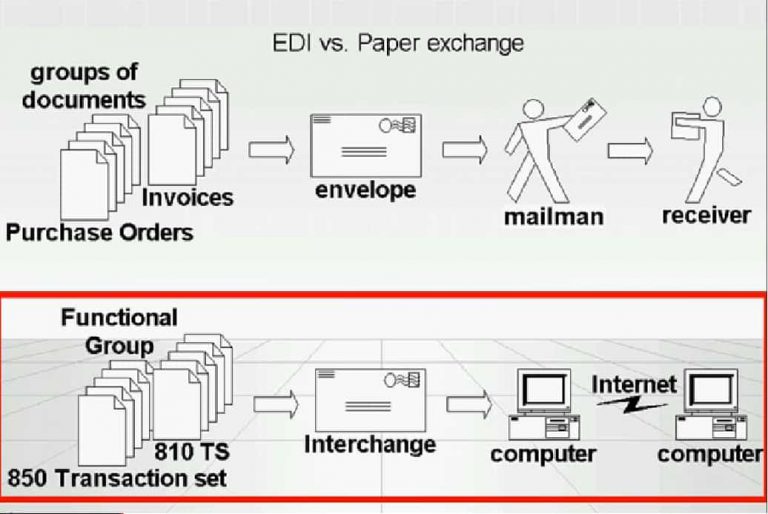
    EDI was designed as much to be as an electronic replica or mirror off a paper document transaction. The paper documents or forms are called transaction sets in EDI and how the documents are arranged and grouped by their departments is equivalent to how the functional group segments separate the transaction sets by their functions.

    Electronic Data Interchange Vs. Paper Exchange
    Electronic Data Interchange Vs. Paper Exchange

    The paper envelope that encloses the documents is equivalent to the interchange segment that encloses the group of transaction sets and the person sending the mail and the one receiving it would be equivalent to a computer sending an EDI file and a computer receiving it. remember that EDI is the exchange of electronic files between computers.

    Complete Electronic Data Interchange

    Comparison of a Paper Envelope to The Interchange Segment (ISA)

    While an envelope has a post-office mailing addresses on it, the interchange segment has the senders and receivers electronic IDs in it.

    Similar to how you would arrange the paper documents by grouping them by their departments that would process them. for example purchase orders are grouped together so that they get sent to the accounts payable Department, while the invoices go to the accounts receivable Department. EDI interchange have the functional group so as to group the transaction sets by their functions. the GS or functional group header segment denotes the start of a group of transaction sets the GE or functional group trailing segment denotes the end of the group. note that the GE segment has the count number of transaction sets that were enclosed in the group. example, 3 purchase orders one invoice. it also has a control number of the GS segment.

    EDI 850 Implementation

    Thanks

  • EDI Standard, Transaction Sets Data Segment| EDI 850 Implementation

    EDI Standard, Transaction Sets Data Segment| EDI 850 Implementation

    In this Article, we will cover the basics of EDI, you will get to its x12 format, its transaction sets, its data segments, elements and loops then finally the implementation guideline.

    Meaning of EDI

    Advantages of Using EDI

    Following are Two main advantages of Electronic data interchange.

    • Easy to manage huge volumes of transactions at minimal operating cost.
    • Eliminate mailing delays and data entry errors.

    EDI Process

    There are two well-defined processes in EDI.

    • Outbound process
    • Inbound process
    EDI Process - inbound and outboud
    EDI Process – inbound and outbound

    The outbound process is, when an EDI file gets generated from data out of an existing system and then sent to a trading partner.

    Inbound process is, when an EDI file is received from a trading partner and its data gets parsed and mapped into an existing system.

    Complete Electronic Data Interchange Knowledge

    EDI Format

    EDI format
    EDI format
    EDI Segment Terminators
    EDI Segment Terminators
    edi element terminators
    EDI element terminators
    edi data segments
    EDI data segments
    edi data elements
    EDI data elements

    let us now take a closer look at the EDI format. in here we have a sample EDI X – a file as you can see, it is quite cryptic but remember it was designed for a computer to process and not for us to read. The EDI format is made up of data segments. separated by segments terminators, the data segments are made up of data elements separated by element terminators.

    Comparison of a Paper Envelope to The Interchange Segment (ISA)

    Order of EDI x12 Standard Segments

    So the order of the EDI x12 segments goes as follows.

    The interchange segments encloses the functional group segments that in turn encloses the transaction set segments.

    Order of the EDI x12 Format
    Order of the EDI x12 Format

    EDI Transaction Sets, Data Segments & Data Elements

    A transaction set is basically the document itself. it is made up of data segments and these data segments are sectioned into areas or tables. the heading is area one or table one, the detail is area two or Table two, the summary is area three or Table three. not all transaction sets have all three areas and in fact many do not have the summary section.

    Transaction sets are made up of data segments and in turn the data segments are made up of data elements. in this example we have four data elements that are separated by element terminators. element terminators can be of any character but the asterisk is commonly used.

    EDI Data Segment, Data Elements and terminators
    EDI Data Segment, Data Elements and terminators

    At the end of a data segment is the segment Terminator. segment terminators can be of any character or string in this example we use the tilde. some data elements are qualifiers, they hold codes that will describe the values of data elements after them. in this example we have BT that tells us that the element is a bill to company.

    The nine tells us that the company ID is using the DUNS identification code. if we were to view a segment as a sentence and the n1 segment would say the bill to company name is ABC Inc with the DUNS ID of one, two, three, four, five, six, seven.

    EDI n1 segment viewed in efilemanager
    EDI n1 segment viewed in efilemanager

    Some view data segments to be like records and their data elements to be like fields. data segments can be viewed better by using the EDI-dev efilemanager. in here we have a section that displays the same in one segment. note how the descriptions of the codes are displayed next to them.

    EDI loops

    Sometimes Data segments have to be read together to obtain the correct information that is when we use EDI loops to denote such relations. EDI loops are used to keep related segments together, so that together they can convey the correct information. loops also make possible to repeat a group of related segments. in our example we have the n1, n2, n3 and n4 segments in a loop. note how the segment’s depend on each other. here the n3 segment with the street address value does not make sense without the n1 segment telling us that it is a street address of the bill to company.

    EDI loops
    EDI loops

    This example also shows how the loop is used twice to hold two different information of similar format. the first loop holds the billed to address while the second loop holds the ship to address.

    The EDI X12 Standard

    Even though it is the standard still has many version and transaction sets, the users have to be aware of so as to exchange EDI files successfully. the version number is indicated by its first three digits, the last digit indicates a release. here, the 40 10 and the 40 20 would indicate a major release and the 40 12 would indicate an interim release. changes in their interim releases are included in the next version therefore version 4020 would include the changes that are in the 4012 release.

    EDI X12 Versions and Transaction Sets
    EDI X12 Versions and Transaction Sets
    EDI transaction set version located in GS Segment
    EDI transaction set version located in GS Segment

    The version of a transaction set in an EDI x12 file can be found in the 8th data element of the functional group or GS segment. even when using the same versions of transaction sets, there are still differences in how companies would use them. for example, some data segments and elements may be omitted or the number of times the loop can be used is limited or some code values of an element restricted.

    EDI Implementation Guideline

    All these rules would be noted in an EDI Implementation guideline.

    850 set edi implementation guideline
    850 set EDI implementation guideline

    here’s an example of an 850 transaction set guideline for a particular company. note that only the segment’s that are being used in the transaction set are displayed and in the required column a data segment that must be used is indicated with an M for mandatory, an O indicates that the segment is optional. the maximum column indicates the maximum number of times the segment can be used.

    The ref segment can be used at most two times, the repeat column denotes the maximum times a loop can be repeated. here, the n1 loop can be repeated at most four times.

    EDI Transaction Set Header
    EDI Transaction Set Header

    The implementation guideline also has a detailed section for each segment which shows the requirements for each of its elements. in this example we have the ST segment that has two data elements. the first element is allowed to have only the value 850. it is a required element with the length of exactly three characters. the second element should hold a control number for the transaction set, it too is required with a minimum length of four and a maximum length of nine characters.

    EDI beginning segment
    EDI beginning segment

    let us take another example the Beg segment that uses only four of its 12 data elements. the four elements use have the position numbers 1, 2, 3 and 5. The first data element indicates that it can only have the value 0 0. it is a mandatory element with an exact length of two characters. the second data element can only have kE, KN or SA as its value. it too is mandatory with an exact length of two characters. the third data element should contain the purchase order number, it is also mandatory the minimum length of one and a maximum of 22 characters. note that the fourth data element is not being used and that the next data element is a fifth data element. it is a mandatory element and should contain the purchase order date value of 8 characters.

  • Most Powerful Fighter Aircraft | Planes | Jets in World

    Most Powerful Fighter Aircraft | Planes | Jets in World

    In terms of sheer numbers of aircraft, the USA leads the way, but that’s not to say that other countries haven’t developed some impressive flying machines designed to protect and serve the populace. The most recent report on the largest defense budgets by country puts the U.S. at the top by a long way, followed by China, Russia, Saudi Arabia, India, France and the UK. Not surprisingly, many of the leading fighter jets were developed in those countries.

    According to defense pundits these are the Currently top 10 fighter aircraft:

    1. Lockheed Martin / Boeing F-22 Raptor (USA)
    2. Lockheed Martin F-35 (USA)
    3. Sukhoi Su-57 (Russia)
    4. Chengdu J-20 (China)
    5. Boeing F/A-18E/F Super Hornet (USA)
    6. Eurofighter Typhoon (European Union)
    7. Dassault Rafale (France)
    8. Sukhoi Su-35 (Russia)
    9. McDonnel Douglas F-15 Eagle (USA)
    10. Mikoyan MiG-31BM (Russia)

    Which is The Best Fighter Aircraft in The World?

    According to defense experts, the Lockheed Martin F-22 Raptor is the most powerful fighter plane in the world. But As not all fighter jets are alike, and as the superlative jet is an ongoing matter of debate, our below list is in no particular order. Today you will decide what’s best according to the specifications of jets and tell your opinion in the comment box.

    Following are some most lethal jets in the world those scare its enemies most.

    Russia’s Sukhoi Su-35

    Taking off from where the Sukhoi Su-27 left off, the Su-35 is Russia’s main fighter jet. The single seat super maneuverable multi-role fighter first appeared at a Russian air show in 2007 and was hailed by the Russian Military of Defense as the greatest fighter jet ever created. Russia is building them as we speak, and many of the new 50–75-million-dollar units will be exported. To fly the jet costs around 35,000 dollars an hour.

    As for specs, it has a top speed of around 1,726 miles per hour (2,777 kph) and a range of 1,940 miles (3,122km). Just so you know, range is how far the fighter jets can fly between take-off and landing. It has a service ceiling of 59,000 ft (18,000 meters), meaning how high it can fly and be fully-operational. It’s extolled for its thrust-vectoring strength, capable of possibly unmatched maneuverability.

    While its electronic warfare system is classified information, we know its infrared-search-and-track sensors can scan other planes’ heat signatures from an impressive range. It carries a bounty of weapons, including air-to-air missiles, rockets, bombs, and a 30mm GSh-30 internal cannon with 150 rounds.

    Sukhoi Su-35 Specifications:

    • Cost per unit: 50-75 million dollar
    • Flying cost per hour: 35,000 dollars
    • Top Speed: 1,726 miles/ hour (2,777 kph)
    • Range: 1,940 miles (3,122km)
    • Service Ceiling: 59,000 ft (18,000 meters)
    • Weapons:  Air-to-air missiles, rockets, bombs, and a 30mm GSh-30 internal cannon with 150 rounds.

    Dassault Rafale

    Needless to say, all of these fighter planes carry weapons capable of shooting pretty much anything out of the sky. The question is, can they do it before something else sees them? The Rafale’s omnirole capabilities, according to its own designers, make it the “poster child” of transformation Fighter jets.

    This means it is capable of switching from a strike force mission to a show of strength mission. Each unit costs around 86 million dollars, depending on which model, and it costs around 28,000 dollars an hour to fly. It’s capable of a top speed of around 1,200 miles per hour (1,912kph) and has a range of around 2,000 miles (3,218 km). Its service ceiling is 50,000 ft (15,240 meters).

    It has air-to-air and air-to-ground missiles, a GIAT 30/M791 auto cannon with 125 rounds and also carries an ASMP-A nuclear missile. It has excellent radar and onboard electronic warfare system, with one military pundit saying it “has a significant advantage in situational awareness over the F-35.”

    Dassault Rafale Specifications:

    • Cost per unit: 50-75 million dollar
    • Flying cost per hour: 28,000 dollars
    • Top Speed: 1,200 miles/ hour (1,912kph)
    • Range: 2,000 miles (3,218 km)
    • Service Ceiling: 50,000 ft (15,240 meters)
    • Weapons:  Guns- 1× 30 mm (1.18 in) GIAT 30/M791 autocannon with 125 round, Air-to-air: Magic II,MBDA MICA IR, MBDA AM 39-Exocet anti-ship missile, Nuclear Deterrence.

    Lockheed Martin F-35 Lightning II

    The USA’s much praised F-35 multi-role stealth fighter has been called the stealthiest of stealth aircraft, although some comparisons make it a fairly equal match to the Rafale. One report tells us, however, that the F-35 will detect the Rafale at 70.2-92.5 miles (113-149 km), while the Rafale will detect the F-35 at 40.3-43.4 miles (65-70km). The F-35 three models are built for short take-off, normal take-off, and catapult assisted take-off. They cost from 95.6-122.8 million dollars, and are around 42,169 dollars per hour to fly.

    The F-35’s expense has resulted in some pundits saying it is too expensive to lose. It can reach speeds of 1,200 miles per hour (1,912kph) and has a range of 1,367 miles (2,200km). Its service ceiling is 60,000 feet (18.288 meters). What makes it so special is its electronic warfare suite, which some have said means it’s a flying hacker like no other. It’s able to jam other planes’ signals perhaps better than foes and has unprecedented situational awareness. Some experts say its pilots have a God-like advantage over enemies in terms of awareness.

    F35 Specifications:

    • Cost per unit: 95.6-122.8 million dollars
    • Flying cost per hour: 42,169 dollars
    • Top Speed: 1,200 miles/ hour (1,912kph)
    • Range: 1,367 miles (2,200km)
    • Service Ceiling: 60,000 feet (18.288 meters)
    • Weapons: Guns: 1 × General Dynamics 25 mm (0.984 in) GAU-22/A 4-barrel rotary cannon, missiles:AIM-120 AMRAAMAIM-9X Sidewinder

    J-20 stealth fighter

    One of the reasons the U.S. is pushing the advancement of the former fighter plane is partly due to other countries pushing their own ultra-modern fighter jets. One of which is China’s fairly new J-20 multi-role stealth fighter. This 110-billion-dollar aircraft has a top speed of 1,305 miles per hour (2,100 kph) and according to one U.S. military analyst has “longer range, more internal fuel capacity, and larger internal weapons capability” than the F-35 and the F-22.

    The same analyst also goes on to say that the J-20 probably does not have the same hyper-connectedness that the F-35 has. What it is capable of is still somewhat of a mystery. National Interest could not provide all the specs for the J-20, but did say in 2026 that “China will not enjoy military superiority over the United States but its latest stealth fighter moves it closer to regional hegemony.”

    J-20 Specifications:

    • Cost per unit: 110 billion dollar
    • Flying cost per hour: 28,000 dollars
    • Top Speed: 1,305 miles/ hour (2,100 kph)

    Lockheed Martin F-22 Raptor

    The aforementioned United States F-22 air-superiority fighter, introduced in 2005, is often seen on the top of lists of the world’s best fighter jets. It’s also staggeringly expensive at around 339 million dollars a unit and an hourly flying cost of 68,362 dollars. This makes it the most expensive fighter jet in the world. The F-22 has a top speed of around 1,500 miles per hour (2,414kph) and a range of around 1,840 miles (2,961km).

    Its service ceiling is 65,616 feet (20,000 meters). It packs all the necessary missiles, guns, bombs, to do the same damage as the rest of the planes on this list, but in comparisons was given the stealth advantage over fighter jets such as the Su-35 due to its Beyond Visual Range capabilities. Some pundits have compared finding the F-22 like finding a needle in a haystack, one reason for its vast expense.

    F22 Specifications:

    • Cost per unit: 339 million dollars
    • Flying cost per hour: 68,362 dollars
    • Top Speed: 1,500 miles/ hour (2,414kph)
    • Range: 1,840 miles (2,961km)
    • Service Ceiling: 65,616 feet (20,000 meters)
    • Weapons: Guns: 1× 20 mm (0.787 in) M61A2 Vulcan 6-barrel rotary cannon in right wing root, 480 rounds, 6× AIM-120 AMRAAM, 2× 1,000 lb (450 kg) JDAM or 8× 250 lb (110 kg) GBU-39 Small Diameter Bombs.

    Eurofighter Typhoon

    This 4.5 generation multi-role fighter was a collaboration between the UK, Germany, France, Italy and Spain, although France wasn’t so keen on some of the design aspects and left to concentrate on building its Dassault Rafale. The ET has been compared to the F-22, and although it lacks the stealth capabilities of the latter it is said to have superior detection systems and so can still find a target from a very long distance.

    Surprise, surprise, when U.S. and European pilots went up against each other in a training exercise, both came back saying their plane was superior. Each unit costs around 140 million dollars and per hour is around 14,000 dollars to fly. Its top speed is 1,550 miles per hour (2,495 kph) and it has a range of around 1,800 miles (2,900km). Its service ceiling is 65,000 feet (19,812 meters).

    The ET calls itself the most advanced “swing-role” aircraft ever made. Swing-role is slightly different from multi-role. According to one air defense expert swing-role means having the “capability to switch between different roles within a sortie, whereas multi-role and multi-mission implies the ability to reconfigure air platforms for different roles and missions between sorties.” In simple terms, it’s a multi-tasker.

    Eurofighter Typhoon Specifications:

    • Cost per unit: 140 million dollars
    • Flying cost per hour: 14,000 dollars
    • Top Speed: 1,550 miles/ hour (2,495 kph)
    • Range: 1,800 miles (2,900km)
    • Service Ceiling: 65,000 feet (19,812 meters)
    • Weapons: Guns: 1 × 27 mm Mauser BK-27 revolver cannon with 150 rounds, missiles: AIM-120 AMRAAM (AIM-120C-5/7 planned for P2E), AGM-65 Maverick, Bombs:Paveway II/III/Enhanced Paveway series of laser-guided bombs (LGBs)

    Saab JAS 39 Gripen

    The Saab JAS 39 Gripen multirole fighter plane is the creation of Swedish aerospace company Saab. According to National Interest the aircraft has a low unit cost – 30-60 million dollars – which makes them a good alternative to some of the more advanced planes featured in this show.

    It’s not only cheap to buy, but also cheap to fly, at around 4,700 dollars per hour. It still has impressive specs, having a top speed of 1,370 miles per hour (2,204 kph) and a range of 1,983 miles (3,200 km). Its service ceiling is 50,000 feet (15,240 meters).

    Its payload and radar systems might not be as advanced as some other aircraft on this list, but it can take-off and land in a very small area as well as refuel very quickly. It’s one of the value for money fighters on this list, and it’s certainly in contention for one of the best fourth generation fighters in the world.

    Saab JAS 39 Gripen Specifications:

    • Cost per unit: 30-60 million dollars
    • Flying cost per hour: 4,700 dollars
    • Top Speed: 1,370 miles/ hour (2,204 kph)
    • Range: 1,983 miles (3,200 km)
    • Service Ceiling: 50,000 feet (15,240 meters)
    • Weapons: Guns: 1 × 27 mm Mauser BK-27 revolver cannon with 120 rounds, Rockets: 4 × rocket pods, 13.5 cm rockets, Missiles:6 × AIM-9 Sidewinder (Rb 74) / IRIS-T (Rb 98) / A-Darter / ASRAAM / Python 4/5, Bombs: 4 × GBU-12 Paveway II laser-guided bomb

    F-15 Strike Eagle

    This multi-role fighter has been around for some time, but still packs a punch. The F-15 has a top speed of 1,650 miles per hour (2,665 kph) and a range of around 1,222 miles (1,967 km). Its service ceiling is 65,000 feet (20,000 meters). The unit cost back when it was being made in the 90s was 31.1 million dollar, although the upgraded F-15K cost as much as 100 million dollars in 2006.

    The last iteration is the F-15S. These machines are equipped with excellent digital electronic warfare and radar suites and according to one analyst it “is still more useful than either the F-22 or the F-35 in certain situations.” That situation would be intercepting other jets, but the downside is it’s not so good at playing the hide part in the game hide and seek. If it’s found, though, it’s hard to beat in a dogfight situation.

    F-15 Strike Eagle Specifications:

    • Cost per unit: 100 million dollars
    • Flying cost per hour: 4,700 dollars
    • Top Speed: 1,650 miles/ hour (2,665 kph)
    • Range: 1,222 miles (1,967 km)
    • Service Ceiling: 65,000 feet (20,000 meters)
    • Weapons: Guns: 1× 20 mm (0.787 in) M61A1 Vulcan 6-barreled Gatling cannon, Missiles: 4× AIM-7 Sparrow4× AIM-9 Sidewinder, 6× AGM-65 Maverick2× AGM-84 Harpoon, Bombs: Mark 82 bomb, Mark 84 bomb.

    Mikoyan MiG 35

    Russia’s MiG-35 multirole fighter follows its progenitor the MiG29. According to analysts it’s about as nimble as an fighter plane can get, but for its agility it has also had to make some sacrifices. The 40 million dollar plane has a top speed of 1,490 miles per hour (2,400 kph) and a range of 1,240 miles (2,000 km).

    Its service ceiling is 62,340 feet (19,000 meters). According to National Interest its radar and missile capabilities should make any foe quiver, and it’s thought its optical locator system should make finding stealth fighters less of a problem. Like the JAS 39 Gripen it is often said to be inferior to some of the planes on this list, but in terms of value for money it’s perhaps the best fighter jet there is.

    Mikoyan Mig 35 Specifications:

    • Cost per unit: 40 million dollar
    • Top Speed: 1,490 miles/ hour (2,400 kph))
    • Range: 1,240 miles (2,000 km)
    • Service Ceiling: 62,340 feet (19,000 meters)
    • Weapons: Guns: 1 × 30 mm Gryazev-Shipunov GSh-30-1 autocannon with 150 rounds, Missiles: R-73, R-77, Kh-25MAE, Kh-29L/TE

    So, which of the aforementioned jets do you think reigns superior? Let us know why in the comments! also share.

  • Fundamental Components of An Android Application

    Fundamental Components of An Android Application

    Hey, we are going to tell you about the fundamentals of an android app in this article. so if you are a student or a developer or anyone who needs to the basic of the android app or the starting points of an android application can read this article.

    Components of an Application

    Component means a part of a larger whole, components in Android are parts that make up an Android app, they are basic building blocks of an Android app. the system enters your app through these components for example when you get a notification about calendar app, you click on it and it takes you to a specific activity. Any android app that you paid is made up of four basic components or fundamental elements those are

    • Activities
    • Services
    • Broadcast receivers
    • Content providers

    What is An Activity in Android Application

    Activity is any component which you can interact with. any user interface that you interact with, for example if you log into your app you will see a login screen, if you want to sign out your page, where sign-on screen, a sign-up screen on your dashboard etc. so any user interface that you see on your lap it’s nothing but an activity.

    What are Services in Android App

    Services are anything which does not have an interface but they run in the background. so anything which does not have an interface but they should be done in the background for a long period of time is the services. for example, you have downloaded a  large image from a website. so you can download it into a service and you could not have any UI and it would be running in the background or you want to sync the contents of your app with the contents of the server, so that you would use a service which runs in the background and there are all the same thing operations.

    What is a Broadcast Receiver

    Broadcast receiver is a subscriber pattern wherein you subscribe for some event and when that event occurs you can notify them saying that event has occurred. you can perform some operations on it. an example would be, you want to start your app or do something when the phone has just been started so if you can register for that event and as soon as your phone is restarted you will get an even saying your phone as we started. you can the corresponding operations that you need to perform on that evening.

    What is content providers

    Content providers are basically an abstract layer which helps in sharing data between different apps. you can imagine a content provider as basically a database from which different apps can query data, with the required permissions. the primary goal of a content provider is to share data between different apps. an example for content providers would be a contact manager wherein different apps can use a contact manager to get all the contacts, their phone numbers, their data from it.

    Alll of these four components, the three components namely activity, services, and broadcast receivers can be activated by an intent. the fourth which is the content provider cannot be activated by an intent.

    An intent basically a messaging system in Android, which is used to pass messages between different components of the Android system.

    Manifest file

    You must declare all the app components in the manifest files so the system knows that those components actually exist. when you create a new project with an empty activity, Android studio automatically declares that activity in the manifest file. you can declare permissions such as accessing the internet minimum API level, hardware requirements such as accessing the camera app or the fingerprint scanner.

    manifest file in android app

    All of these components are declared under the application element to declare an activity we use activity element, to declare a service use service element, for broadcast receivers use receiver element and for content providers use provider element.

    How to define a components in Android Application

    how to define component in android application

    In the manifest file, you can declare an activity like using the activity tag. it has an attribute per name which is nothing but the class of the activity that you want to declare.

    The Lable is nothing but the spring which will be displayed in the activity. interpreters are basically telling the Android system what intent will this activity respond to.

    To declare a receiver, you can use the receiver tag differently with the name of the class given in the hydrocodone name. you can add an intent filter saying that for what events will this receiver responds. For Example, whenever a Wi-Fi state of the device changes, this receiver will get the notification and it will execute.

    To declare service, you just need to use the service tag and you can give a name service in the name attribute of the tag. you need to use a provider tag, define a provider and the same goes for the signal.

    so these are the basics of an Android app I hope you liked it and remember to Like, comment and share it on social media websites.

  • Introduction to Supply Chain & It’s Management

    Introduction to Supply Chain & It’s Management

    Hey, We are presenting here an awesome article on supply chain and it’s management. You will get here complete information about supply chain. Below you will read about what is a supply chain, the Basic supply chain for a product, strategies, flows, examples i.e. supply chain in manufacturing and supply chain in services. You will also read about types of the supply chain such as vertical & horizontal supply chain management,  it’s benefits, differences, stages and most important, what is supply chain management with proper definition and example.

    What is a Supply Chain

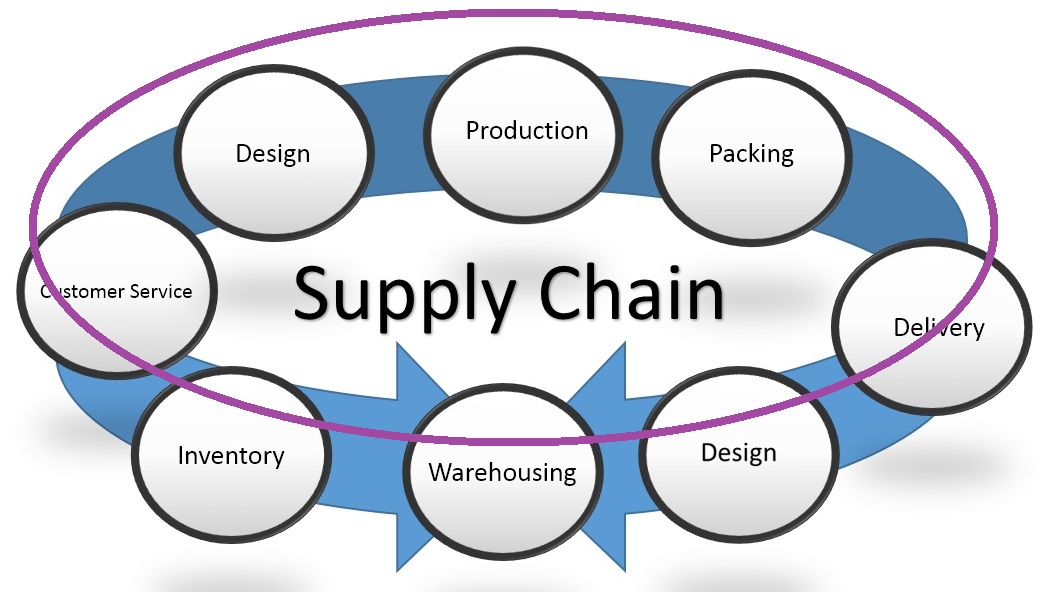
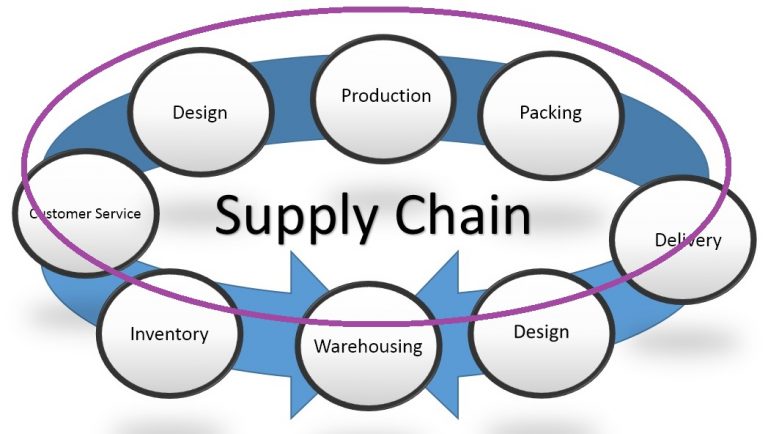
    A supply chain is a global network used to deliver products and services from raw materials to end customers through an engineered flow of information, physical distribution, and cash.

    Basic supply chain for a product

    supply chain information flow

    The figure here illustrates a very basic supply chain with three entities, a producer with one supplier and one customer for basic flows that connect the supply chain entities together are as follows – flow of physical materials and services from suppliers to the end customer, flow of cash from the customer to the raw materials supplier, flow of information back and forth along the chain and reverse flow of product returned.

    Elements of Basic Supply Chain

    A basic supply chain in this figure is made up of these entities.

    • Seller is a supplier who provides goods and services or a person or organization with whom the buyer does business, their generic term in marketplace is sailor.
    • Supplier provides materials, energy, services or components for a product or service such as plastic, fabric, electric, wiring or aircraft.
    • Producer is the one who receives components from the seller to produce a finished good or service such as shirts from fabric, crockery from plastic, power from electric wiring or provides transportation through aircraft.

    The customer is the one who receives the finished product that is the one who wears those shirts uses the crockery turns on the lights or flies in an aeroplane.

    Supply Chain Strategies

    There are three types of supply chain strategies stable, reactive and efficient reactive.

    • Stable Supply Chain Strategy is appropriate for chains that are focused on execution, efficiencies and cost performance. they use simple connectivity technologies and have little need for real-time information for example table salt manufacturer uses scaled production and dedicated capital assets.
    • Reactive Supply chain Strategy works well when the chain acts to fulfill demand from trade partners, for example manufacturer a sports team apparel for fans. when it seemed makes it to the next round more products are needed however for the losing team demand virtually disappears.
    • Efficient Reactive Supply Chain Strategy focuses on the efficiency and cost management on the total delivered cost of finished goods, for example in supermarket chains distribution centers, logistics providers and manufacturers cooperate to replace the goods sold in the shops within less than 24 hours.

    Flows in Supply Chains

    There are four flows in supply chains.

    • Information flow includes invoices, sales literature, specifications, receipts, orders and rules and regulations.
    • Primary cash flow includes payments of products and supplies.
    • Primary product flow includes materials, components, supplies, services, and finished products.
    • Reverse product flow includes returns for repair, replacements, recycling, and disposals.

    Supply-chain Examples

    Consider a supply chain model of a bakery who sells a variety of cakes and this Baker is one end of a supply chain in this case a supplier is a wholesale food distributor that provides ingredients such as flour cream and sugar. the bakery is the producer who turns those ingredients into a variety of cakes. the bakery is operated by an owner who is the retailer and who sells these cakes to the customer.

    Supply Chain in Manufacturing

    Consider a complex manufacturing supply chain model that appears in corporate supply chains. in this model, you will notice the second tier of suppliers and more distribution centers and customers. these suppliers supply materials as well as services. you put the manufacturing at the center and suppliers of components to the immediate left the Tier one suppliers have their own suppliers in tier two, for example, tire one supplier might be a wholesale food distributor that purchases flour from it’s own supplier.

    This supply chain for flour starts from farmers wheat field which is supplied to the food distributor processed in a plant shipped to wholesalers and distribute it to the stores. no matter how far you travel toward the left, you will never run out of new tiers of suppliers. primary product flows from left to right and primary cash flows from right to left.

    Supply Chain in Services

    initially the supply chain model was developed for manufacturing but the service industry has supply chains too. a few examples of services industries our electricity provider, legal adviser, real estate, construction, software house, and even federal government. in its broadest sense service industries include all organizations except farming, mining, and manufacturing. below exhibit illustrates the supply chain of an electric utility it receives products services and supplies and dispenses its services to home customers, commercial customers and to other utilities.

    Types of Supply Chain

    • Vertical supply chain management
    • Horizontal supply chain management

    Firms generally pursue one of the two types of supply chain management vertical integration and lateral or horizontal integration.

    Vertical supply chain management

    it is an arrangement in which the supply chain of a company is owned by that company. usually, each member of the supply chain produces a different product or market specific service and the products combine to satisfy a common need. this structure still persists in some companies. vertical integration enterprise may grow from an entrepreneurial base by adding departments and layers of management or through mergers and acquisitions for example in an attempt to create a self-sufficient enterprise, Ford owned iron ore mines steel mills, a fleet of ships, manufacturing plants and showrooms that built and distributed the Ford cars.

    Horizontal supply chain management

    it is an expanding of a business by acquiring a similar company in the same industry. it is contrasted with vertical integration where company produces different items which are related to one product. the company may do this via internal expansion, acquisition or merger. the process can lead to monopolies if a company captures the vast majority of the market for that good or service, for example, a company that manufactures shampoo may add other brands to appeal to a wider customer base.

    Benefits of vertical integration

    Its primary advantage is controlling no dependency for components or services. operations can be synchronized with other company functions.

    Benefits of lateral integration

    They achieve economies of scale and scope they focus entirely on particular business so develop more expertise and they know their market well.

    Differences between vertical and lateral integration

    when a company wishes to grow through a vertical integration it is seeking to strengthen its supply chain reduce its production costs capture upstream or downstream profits or access downstream distribution channels. however, when a company wishes to grow through a horizontal integration it is seeking to increase its size, diversify its product or service, achieve economies of scale, reduce competition or gain access to new customers of the same market.

    Stages of supply chain management evolution

    • Multiple Dysfunction
    • Semi functional Enterprise
    • Integrated enterprise
    • Extended enterprise

    The advances in supply chain management are reflected in each supply chains development, there are typically four or five sequential stages globally and within organizations starting from state zero to four they are stable, multiple dysfunction, semi-functional Enterprise, integrated enterprise, and extended enterprise. every organization falls somewhere within these five stages. some companies shelter from changes so they are less advanced some took advantages of changes and some organizations to believe that they are in the most advanced stage.

    1. Multiple Dysfunction

    the nucleus organization lacks internal definition in goals there are no external connections other than a few transaction links. below exhibit illustrates the lack of coordinated flows of information or solid relationships among potential partners such organizations have unplanned activities, more threats, less forecasting, demand and supply issues, and poor payment flows.

    2. Semi functional Enterprise

    at this stage nucleus organization begins to improve effectiveness, efficiency and quality within functional areas as explained in a below exhibit information flow has been improved and functional areas have been defined, however, departments perform their functions one after the other. there is no collaboration between various departments and no partnership formed with customers and suppliers.

    3. Integrated enterprise

    these organizations are fully integrated between departments using enterprise resource planning or ERP. this is a preload to end-to-end supply chain management as explained in below exhibit, individual firm begins to focus on business processes rather than compartmentalized functions. corporate wall links supply chain partners together.

    4. Extended enterprise

    the firm integrates its internal network with the internal networks of supply chain partners in order to improve efficiencies product or service quality or both, exhibit shows the advancement this structure allows complete sharing of information across integrated networks and team building and planning across corporate boundaries.

    What is supply chain management

    Supply chain management is the management of the flow of goods and services, it includes the movement and storage of raw materials, work-in-process, inventory, and finished goods from point of origin to point of consumption. every product that reaches an end user represents the cumulative effort of multiple organizations some organizations have only paid attention to what was happening within their four walls while some did not but the entire chain of activities ultimately delivered products to the final customer, the result was disjointed and often ineffective supply chain.

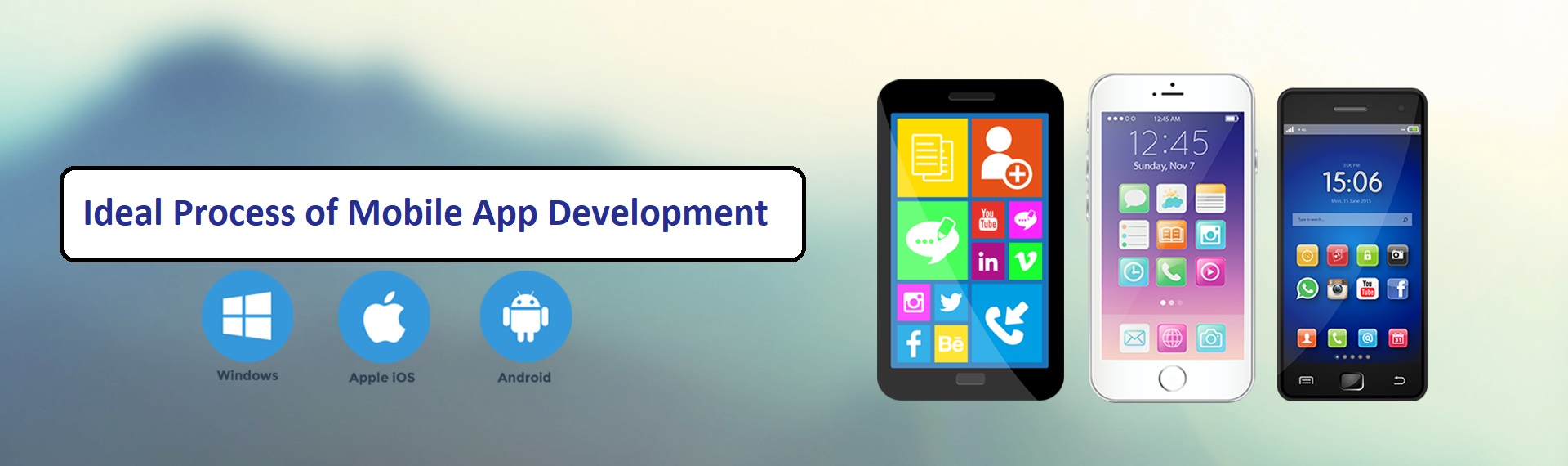
  • Ideal Process of Developing A Mobile Application

    Ideal Process of Developing A Mobile Application

    As we all know, this century is dedicated to Information technology specially mobile application development. we are developing different kind of information mediums to connect and advertise; mobile applications are one of those mediums. Now every business is extending its reach toward mobile applications dedicated to their businesses and it is leading everyone to more and more competition in the mobile application development industry. the approach of the development of mobile application must be very clear so that it would be able to convey your business objective to your customers easily. An agile and organized way must be applied when we are going for mobile application development.

    Different kinds of mobile applications are being launched on daily basis at google and apple app stores. The purpose of each application must be clear from the starting of app development i.e. Game, entertainment, video streaming, chatting, business or e-commerce application. The development approach for each app would be different from another and since the technology is being upgraded rapidly, new ways of application development are coming in existence.

    There would be different stages in every agile mobile application development process that are stated below.

    1. The goal setting and understanding the aim of application development.
    2. Choosing the platform for application development.
    3. Deciding the structure and user interface of application development.
    4. Using an agile way of application development.

    Process of Mobile Application Development

    The mobile application development is a platform-specific process. there are major two platforms in the market, Android and iOS that have covered the almost entire mobile application development market. Now hybrid platforms are also becoming popular since it is compatible with both iOS and Android operation systems, people are seeing it as the future of mobile application development.

    The iOS platform is managed by Apple company, so it fully compatible with iPhones and iPad and all other Apple products. The programming of IOS Applications is done into objective c and swift programming languages.

    The MAC, a product of apple support Xcode also know as Integrated Development Environment.

    The android is a product of Google and Java programming is used for its development. both the iOS and Android platforms are very popular in the market and require the high technical ability for its application development.

    Following are the step by step procedure of development of mobile application.

    1. App Idea Research
    2. Take feedback from customers
    3. Decide your Revenue Model
    4. know the uniqueness of your application
    5. Select your platform
    6. Making Decisions about the Budget
    7. Marketing of Mobile Application

    App Idea Research:

    Firstly, we should do market research about the app idea. It is the most basic step in building a mobile app. Find the need of your app idea in the market. If you find out that there is a requirement of certain kind of application among customers then you can start working on it.

    Take feedback from customers:

    Take strong feedback from your potential customers, you can also ask your friend and family members for suggestions to improve the elements of your mobile application. also, compare your idea with existing apps of the same niche and try to give something more than those apps to your customers.

    Decide your Revenue Model:

    An app can only be stated successful by its earning data. So, it is very important to decide the ways of revenues through your app. some apps get it’s earning through ads and many apps use payment getaways by selling any product or services.

    know the uniqueness of your application:

    Ask your customers about the uniqueness of your app. Your app must offer a fresh idea as well as its appearance. ask them to give a rating on certain points such as, do they like the idea of application or they find the application user-friendly or not.

    Select your platform:

    Now it is time to select your platforms of development. weather, it is android or IOS or both. after selecting the platform of development start choosing your team members. for android application development, you will need an android developer and for IOS application development, you will need IOS developer.

    Making Decisions about the Budget:

    Decide all possible expenses in the mobile application development and allocate the 25% of the budget in starting. It will be good to allocate the budget in different sets of 25 to 30%.

    Marketing of Mobile Application:

    As we all know that lakhs of apps launched on mobile app stores on monthly basis hence it is important to do something unique to be recognized among them. set your marketing idea very smartly that focused on your target audience only. first, launch prototypes of mobile app and ask for feedback from your customer. Do it two-three times and then launch your final app to your customers. Go with ASO, social, video and all other digital platforms of marketing for your app promotion.

    Since it is the digital era of marketing. No business can grow without the use of mobile applications for gaining more customers. as we all know that online marketing is growing rapidly, it makes the importance of mobile application development more valuable. A great app can be only be built through these steps, so follow these mentioned steps to get the best mobile application for your business.

  • What is EDI Meaning | Electronic Data Interchange Definition

    What is EDI Meaning | Electronic Data Interchange Definition

    Tech Turf is Presenting here the article to tell the basic understanding of EDI. Electronic data interchange (EDI) is the latest technology by which you will be able to send your important documents from one computer to another in a secure way. Here, we are providing complete information about the basics of electronic data interchange that will be useful for you to understand it in a better way.

    What is EDI Meaning?

    The Simple definition of EDI is as follows,” the interchange of electronic documents in a standard format from one electronic device to another in a secure way is called EDI.

    Previously, the business documents were exchanged through paper-based format but now in the modern era the business documents are exchanged electronically from one computer to another and there are many benefits of doing that. there are many advantages of using EDI in organizations such as a reduction in cost, increase of processing speed, reduction in errors, improvement in security etc.

    Electronic Data Interchange Definition -2

    Electronic data interchange is the exchange of electronic files in a standard format that is easily process-able by a computer so that the exchange can be automated without any human intervention.

    Complete List of EDI Articles

    Factorization of EDI Basics & Elements

    Following is the complete meaning of EDI definition elements that will help you to understand the EDI more better.

    What is meant by “One Electronic Device to another”?

    EDI is the new era of technology, It had replaced the old technique such as postal services, email, fax etc. as we all know that the email is also a digital method to send the documents but it does not come under EDI because it is handled by human rather than electronic devices such as computer. when the human intervention comes in any process, it make the process very slow and less secure, it also includes many errors in the process.

    But, If you talk about EDI documents, it directly goes to the receiver’s electronic device and the processing of the information done by the computer itself in a very quick way.

    You will be able to understand the difference between the manual process and EDI process for the interchange of a document by following images easily.

    Manual Document Exchange
    Manual Document Exchange


    EDI Document Exchange
    EDI Document Exchange

    What is business document in EDI?

    These are any normal kind of document that is usually exchanged between one business to another. Purchase orders, ship notices and business invoices are the most conman examples of electronic data interchange documents. But there are many another kind of documents that are sent over EDI network such as billing documents, logistics and inventory documents, business proposals etc.

    What is meant by Business partner in EDI?

    In EDI Process, there are two ends, one is the sender and other is a receiver. These ends are mostly two different companies or organizations that are exchanging their important document with each other through edi. these companies are termed as trading or business partners.

    What is meant by Documents Standard format in EDI?

    In the process of electronic data interchange, the documents are processed through electronic devices such as a computer. the document sent over the edi network must have a defined format so that the electronic devices could be able to read and understand it. You can assume the standard format as the defined place for every unit in the document. A standard format of EDI documents defines the format of a document such as decimal, integer, mmddyy, language etc. It also describes each part of the information contained it in the document. if different edi document formats are used in the edi process then it would not be understood by another computer. It would create a situation as a french speaking man is trying to understand an English document.

    • EDI Document formats: Now a days, many EDI formats are in tradition such as ODETTE, VDA, EDIFACT, ANSI, TRADACOMS, ebXML, HL7 etc. there are many different kinds or versions of every EDI standard i.e. ANSI ASC X12, EDIFACT version D12, ANSI 5010. To exchange the documents over edi network, the sender and receiver end of computers must use the same edi standard version.
    • Use of EDI Translator: Many organizations use EDI translator, it is used to translate the electronic data interchange format in the internal application format of organization so that the organization computer can understand the EDI document and start processing it immediately. Organizations use the EDI translator as an in house software application or they take help from EDI services providers.
  • Most Simple Meaning of IoT & Connectivity Components

    Most Simple Meaning of IoT & Connectivity Components

    Hello, Are you excited to know and Understand the internet of things technology? well this article is all about the simple definition of IOT, components of IoT, Its uses, future aspects and many more things. You will also get here the advantage and disadvantages of internet of things.

    When we hear about “internet of things”, the first question came in our mind is, what is the “things” in the internet of things. we already familiar with the terms “internet” and “things”, but the complete meaning of IoT is something different form their individual terms. if you need one line definition for the IoT then that will be :

    “Connecting things that can be connected through a wireless network to produce better results from the things” We all know about the revolution of internet that how it change the our individual life and industry as well and now we are waiting for the next revolution of 21st century. Guys, the next big revolution is already here, it is the internet of things. it will make everything talking to us and following our commands orally, think about the situation when you will be able to do any things that you want, only by your command or even without your command.

    Suppose like a situating in which you are doing every thing only by saying it. you want to turn your lights off, play your favorite songs, a car that follows your command or a door that recognize your voice and opens only for you or something that is important to you and you forget it but the machine do it by itself for you. it surly will be a awesome moment for all of us.

    These all things are real and happening in reality, we are already living in a smart world because we already have heard about smart phone, smart tv or smart devices but IOT is making the things more smart by enabling the ability to communicate with each other and outside world.

    What is internet of things?

    IOT is Stands for Internet of things. Everybody is now searching for the simple definition of internet of things, we are presenting below most simple meaning of IoT that can be understood by even dummies.

    “The network of interconnected things (devices) that are embedded with sensors, software, network connectivity to share data with each other, and communication devices are called Internet of things”

    Basically, Internet of things is more then a simple concept, it is architecture of networks that enables integration and data exchange between electronic devices and physical world.

    Components of Internet of Things

    It is widely seen, many people thinks that internet of things is an independent technology, but it is not true. internet of things is a technology with the combination of other technologies including communication technology, wireless technology, electrical and electronic technology, computer science & information technology. these all technologies are required for the internet of things architecture and infrastructure.

    The application and dimensions of internet is changing rapidly, now it is used to make connection between physical world and electronic devices. there is a rough estimate that within 5 year from now 50 billion devices will be online connected to outside world through communication devices. there are many components of internet of things, but we can categories these components into three category i.e. Artificial intelligence, Sensing through sensors and wireless communication devices.

    Following is the basic components that are required to create an Internet of things architecture and Infrastructure.

    • Hardware
    • Software
    • Communication infrastructure
    • ZigBee
    • BLE (Bluetooth low energy)
    • WIFI

    Hardware: We can say that hardware provides sensing power to IoT device, there very intensive use of vital sensors that collect data from outside world. the one of the main features of Internet of Things is collecting data from outside world, it is only possible due to the IoT electronic sensors. These are the physical elements, that are visible to everyone i.e. communication devices, that enable the capability of communication with outside world.

    Software: It enables the capability of processing and storage of data, producing results with collected data. the second essential component of IOT is its intelligence, the data collected by the sensors is stored by software, software provides it the most necessary processing capability of any data. we also can call it the intelligence of Internet of things devices.

    Communication infrastructure: The most important feature of IoT is the sharing and collecting of data with other devices, this can be possible due to communication elements in the Internet of Things architecture.

    The sensing power of IOT also shows power consumption efficiency, the sensors of IOT are mostly in sleep mode, they become online only when they needed. this way the Internet of Things sensors shows power consumption efficiency value. the one of the main causes for the success of IOT is, its wireless connectivity with low power consumption. The low power consumption by a power node of Internet of things is not only possible because of hardware advancements, the latest smart communication protocols i.e. ZigBee contributes significant role in it. It enable the ability in IOT devices to share data with low power consumption.

    ZigBee: It is a mess networking electronic device that help in utilization of communication resources more efficiently with low power consumption. it was manufactured by the collaboration of 16 companies. A Zigbee based IoT node can connect directly to the central controller, it also can use other nodes to propagate data.

    BLE (Bluetooth low energy): It was firstly introduced by Nokia in 2006, named as wibree. It was also known as smart Bluetooth because it provides same range of area coverage with very less power consumption. BLE is extensively used in IOT devices to reduce the power consumption.

    WIFI: Wifi is the most modern wireless radio technology, so it is a predominant component of IoT devices. there are several protocols i.e. WPS, makes it possible to integrate the Internet of Things devices over existing network more easily. But the power consumption of conventional Wifi is higher, makes them less popular idea for IOT devices. but the modern wifi devices i.e. Zigbee or Ble makes it possible to use Wifi at lower power consumption.

    As the use of IoT is scaling up many more companies are coming to make Internet of Things components that are more efficient. companies like Atmel, Texas instruments and Freescale are now producing more efficient products around the three major components of Internet of Things, now the latest micro-controllers, chips makes it a lot easier to build an IoT architecture.

    Future of Internet of Things

    Since the telecommunication sector is booming and latest technologies like 5G make the internet connectivity very rapid and cheap, now it is less costly to make wifi enabled components for iot architecture. around five year ago, when the internet & communication technology was not so advance, it was very difficult and costly to make an iot component but with these upgrades an IOT device is much cheaper then before. As the basic phenomena of internet of things, all the things that can be connected will be connected through IoT to make our life more easier, in future all the IOT connected things will follow our command like we are the master of that things.

    For example, suppose a future, you wake up in the morning and your alarm clock told the geezer to heat the bathing water or you are going out but weather is rainy and your watch reminds you to take an umbrella, these are the most basic examples of IOT. In future, Internet of Things is going to be used in everywhere around you like making smart secure home, smart health care devices, smart traffic control, smart cars, smart cities, smart cloths and many more things.

    Disadvantages of Internet of Things

    We always have a doubtful look of privacy and security when we talk about any technology, well IoT is not different from others, In IOT, there will be a series of connected devices for our personal use, if any hacker will hack one of the device, they will able to extract data from all devices, this makes the Internet of Things vulnerable to hacking attack. The Internet of Things experts are working hard to make the iot devices more secure for the user. hopefully, in near future, we will be able to see some more secure iot devices for users.

    Conclusion: Internet of Things is certainly going to become the most advanced revolution of 21st century, very basic phenomena of IOT (the things can be connected will be connect) will become true. there are rapid advancement is coming up in Internet of Things as the more users are increasing, the number of connected devices are increasing too. mean while, we should teach each other about IoT because in very near future we all will need to use the internet of things technology, so it is better to know about it already.

    We hope that this article have helped you to understand the meaning of internet of things in a most simple way and now you will be able to connect it from your real daily life. Now, you know the importance of IOT that you will certainly face it in future so it is important now to be familiar with internet of things in advance. Keep coming on our website, you will always find some new and easy to understand information about latest technologies such as IoT.

Advertisement